
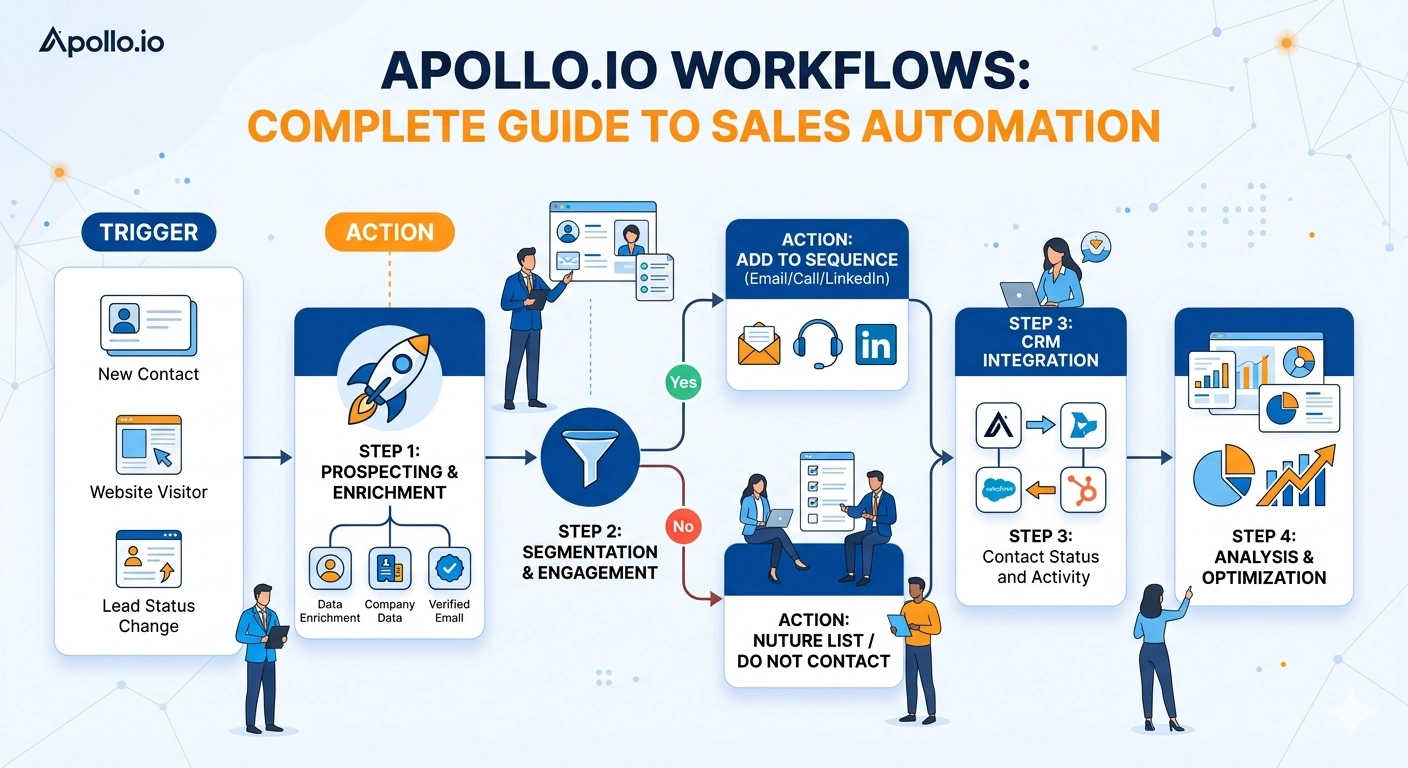
Introduction
Apollo.io is a platform designed to make life easier for sales and marketing teams. It helps them find and connect with the right people, so they can focus on building real relationships instead of wasting time chasing dead ends.
In sales and marketing, a lot of time gets wasted doing the same tasks over and over, like sending follow‑up emails or updating records. That’s where Apollo.io makes things easier. It has a feature called Workflows that takes care of these repetitive jobs for you automatically.
In this blog, I’ll break down what Workflows are, why they matter, and how you can set one up step by step inside Apollo.io. Don’t worry if you are new, this guide is written in a beginner friendly way so you can start automating your outreach without any confusion.
What is a Workflow in Apollo?
A Workflow in Apollo.io is like a smart helper that takes care of tasks for you automatically. Instead of doing the same things over and over, you can set rules so Apollo knows what to do when certain events happen.
For example:
- When a new contact is added.
- Automatically send an email.
- Assign the contact to a sequence.
- Update a field or status.
Why Use Workflows in Apollo?
- Save time.
- Reduce manual work.
- Improve follow-up consistency.
- Help manage leads efficiently.
- Automate repetitive sales tasks.
Prerequisites
- Apollo account.
- A Sequence already created.
- LinkedIn account connected with Apollo.
- Permission to use Workflows.
Find Workflows in Apollo
- Log in to your Apollo.io account.

- After login , Go to the left-side navigation menu.
- Click on Workflows.
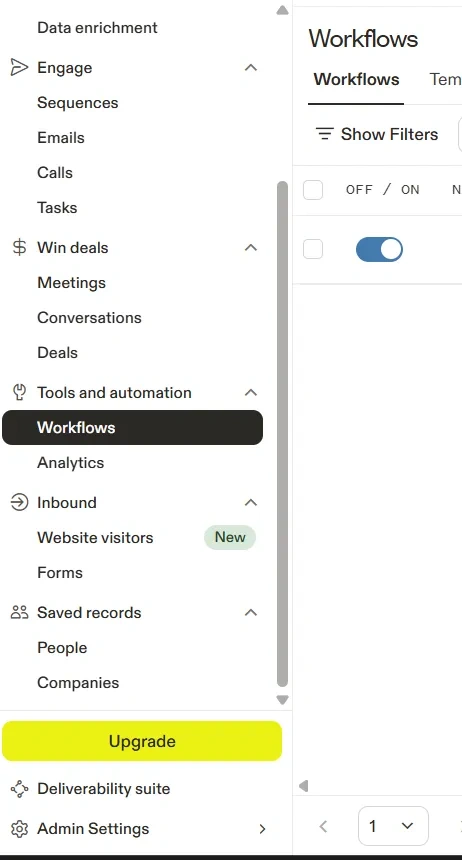
Basic Components of a Workflow
Before you build a workflow in Apollo.io, it helps to know its basic building blocks. Think of a workflow as a set of rules that tell Apollo when to do something, who it should apply to, and what action to take.
Here are the main parts:
1. Trigger
-
This is what starts the workflow. It’s like saying, “When this happens, begin.”
Example:
- Contact is created
- Contact status changes
- Contact is added to a list
2. Conditions
-
Conditions act like filters. They decide which contacts should go through the workflow.
Example:
- Contact country is India.
- Job title contains Manager.
3. Actions
-
These are the tasks Apollo does automatically once the trigger and conditions are met.
Example:
- Send an email
- Add contact to a sequence
- Update a contact field
- Assign owner
How to Create a Workflow in Apollo.io
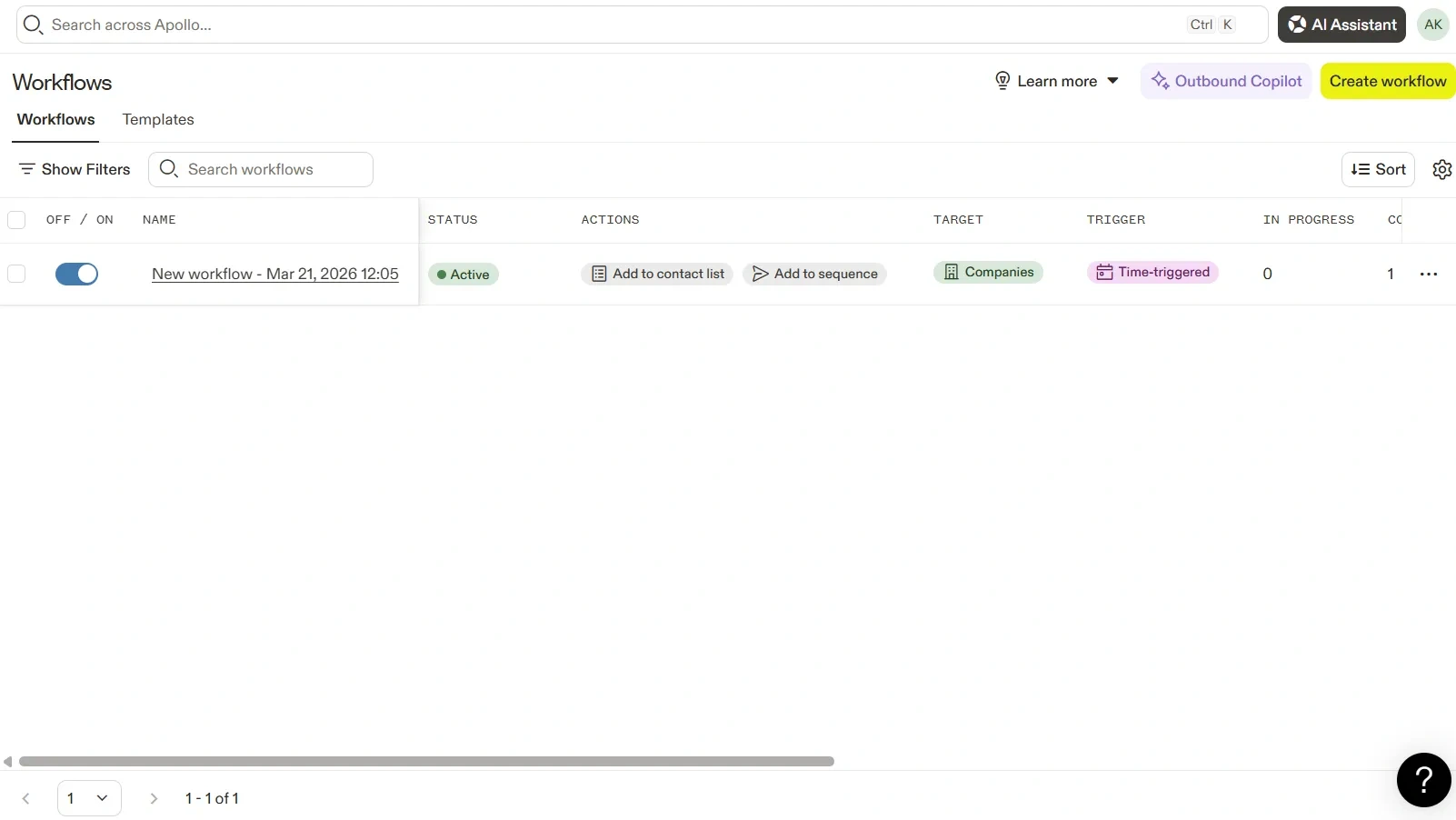
Step 1: Create a New Workflow
- Open Workflows.
- Click on Create Workflow.
- Select the Start from Scratch option.
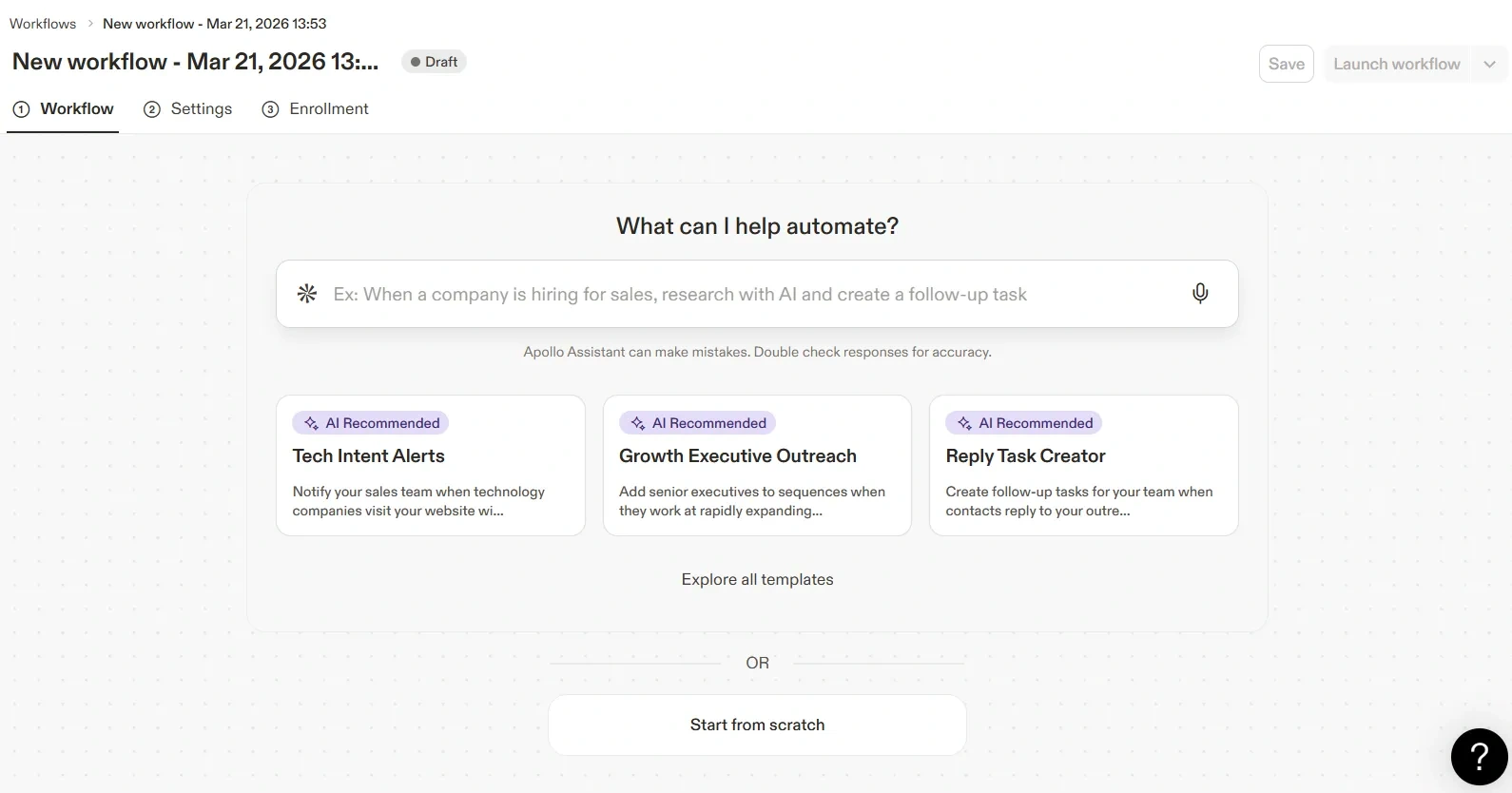
Step 2: Select a Trigger
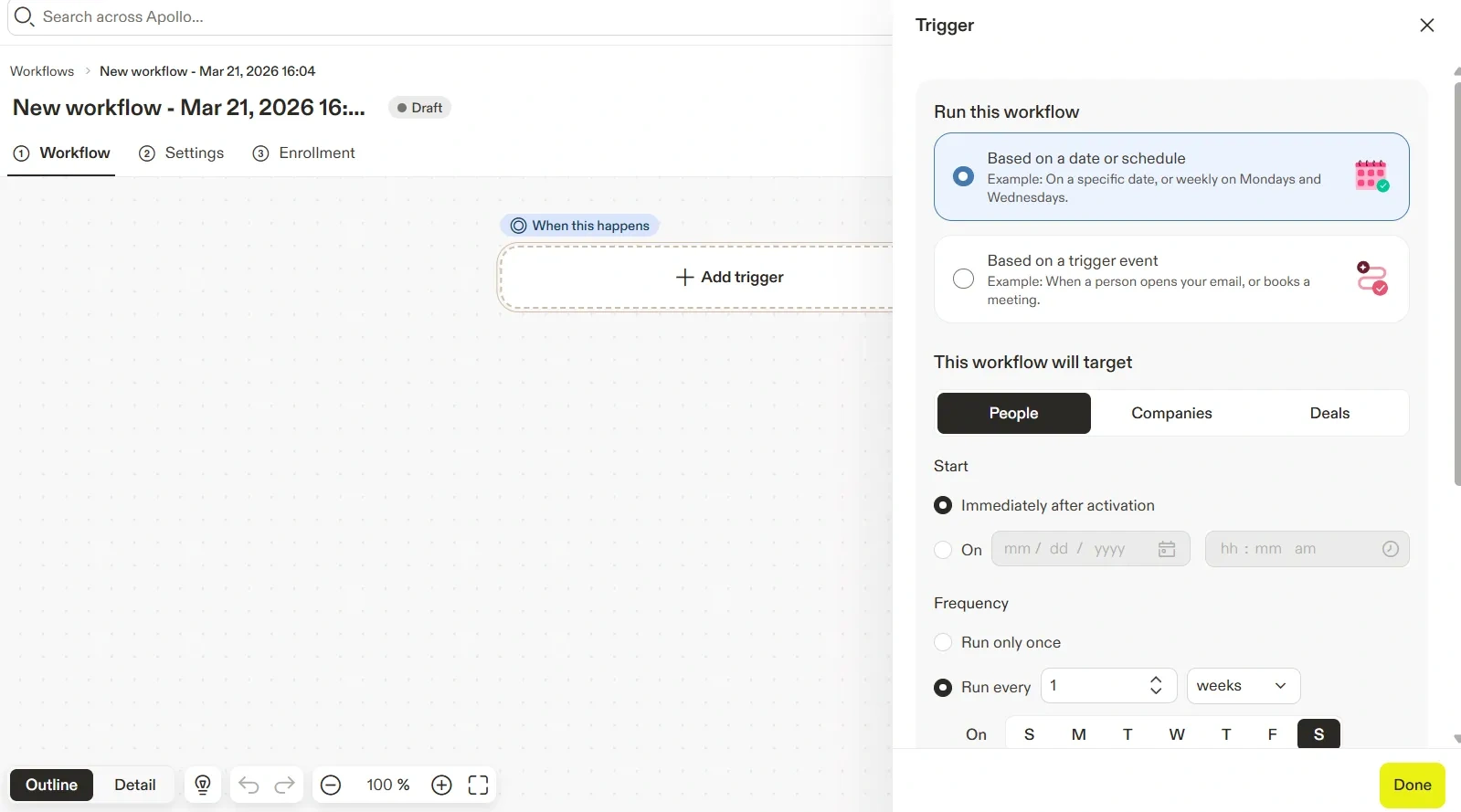
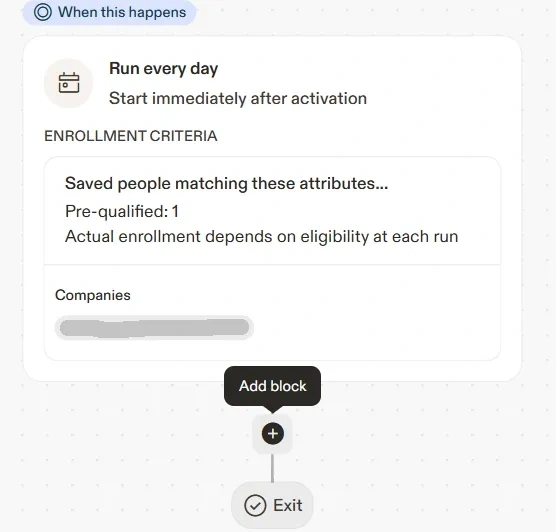
- Select the Trigger as Based on Date or Schedule, then choose Run Every - Days as the schedule.
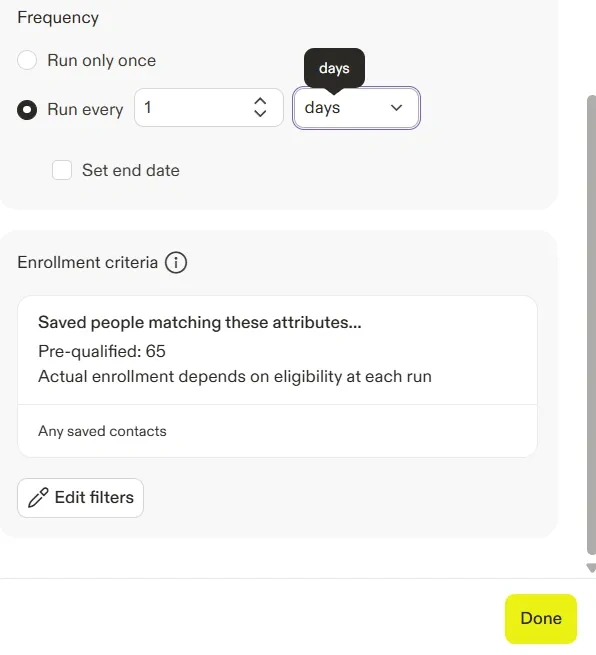
- Click on Edit filters button.
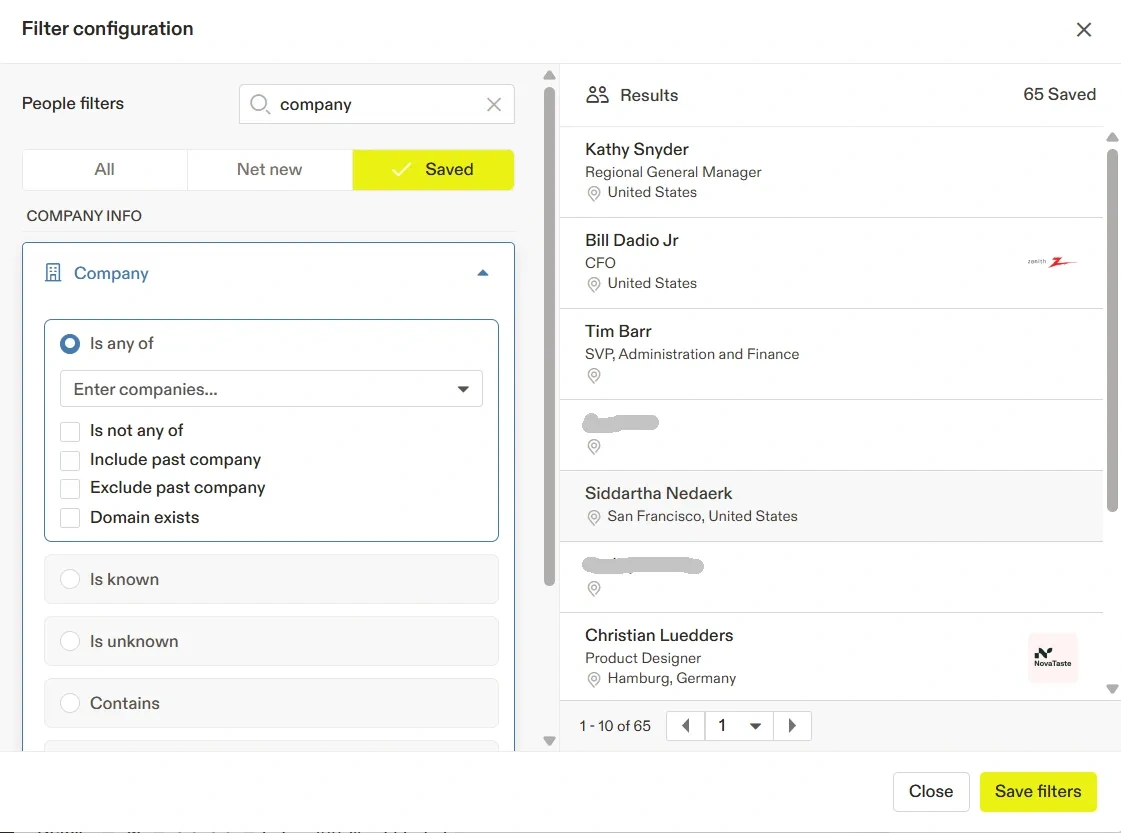
- After clicking on Edit Filters, search for the Company name, set the filter accordingly, and then click on Save Filters.
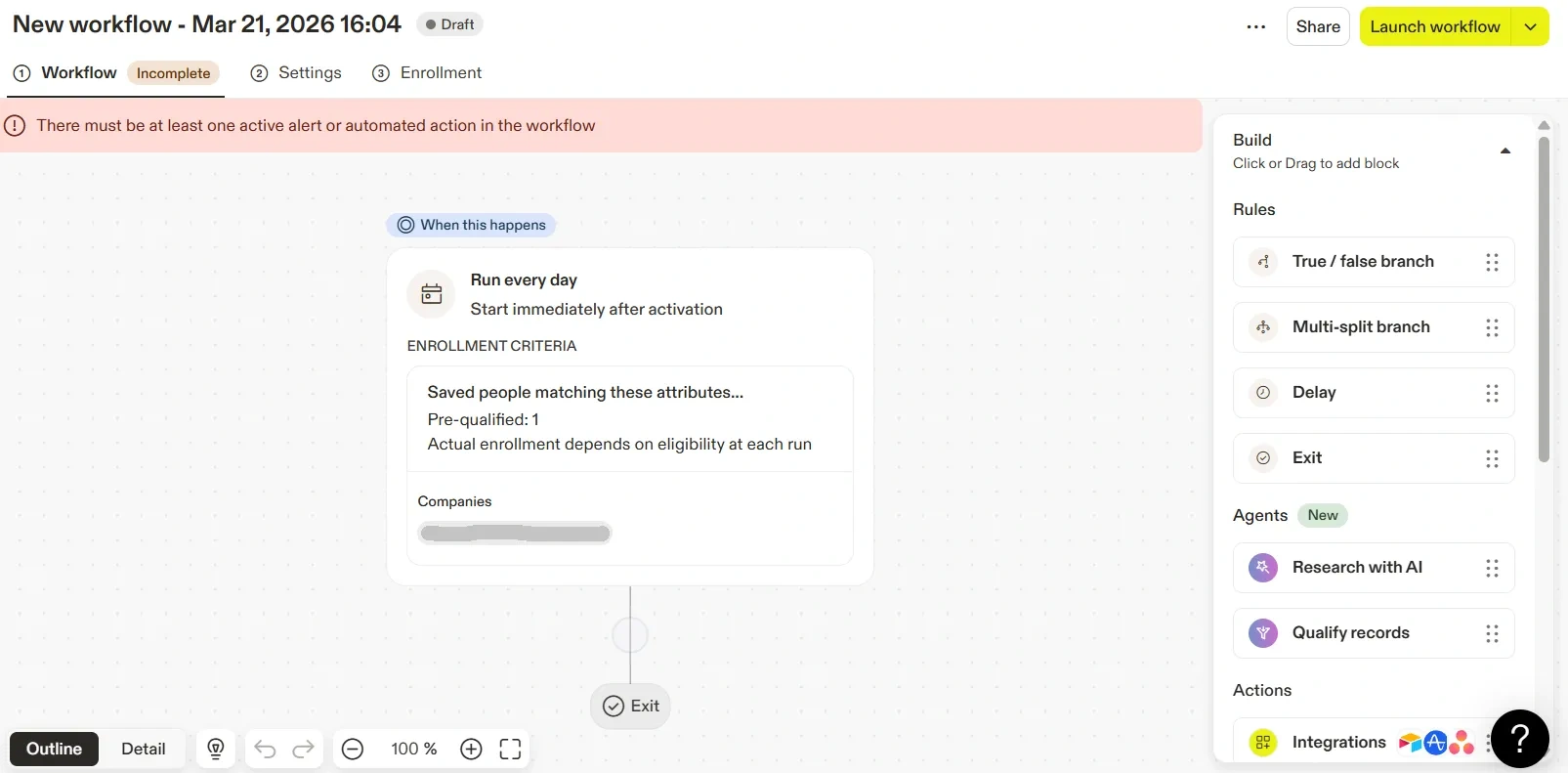
- Click on Done. You will then see the workflow structure, where contact records from the selected company are automatically included.
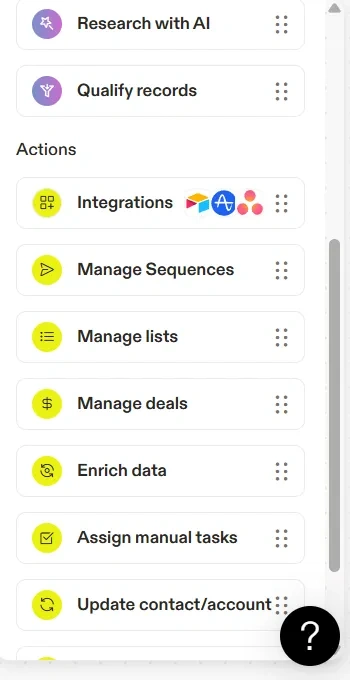
Step 3: Add a block for Manage List
- Click on Add block.
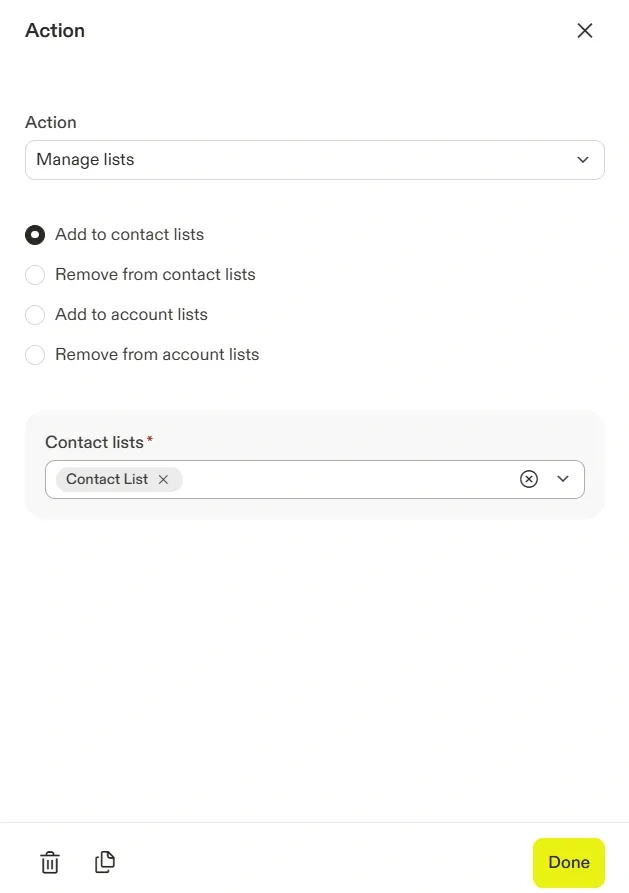
- Click on Manage list and then select add to contact list and then click on save.
Step 4: Add a block for Manage Sequences
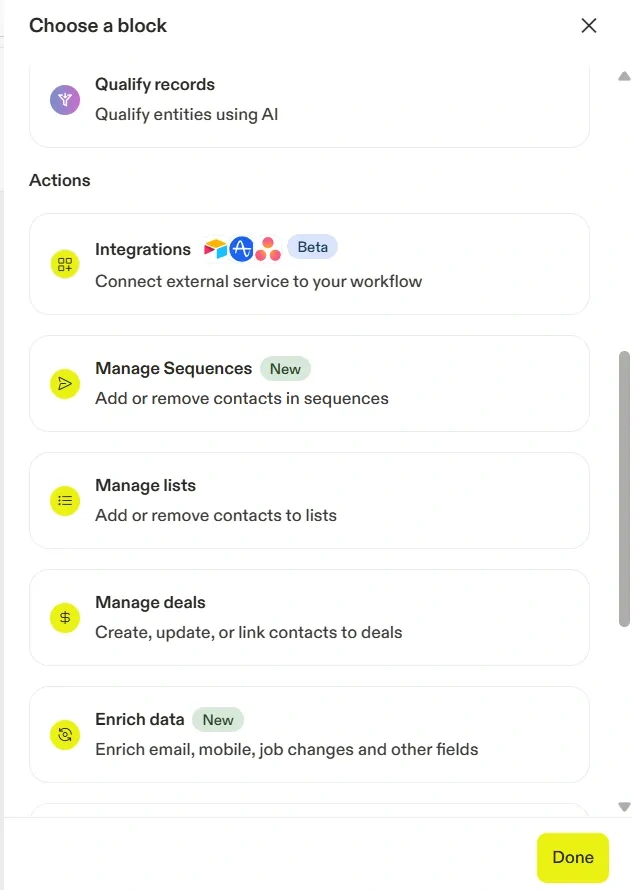
Click on Add Block again and select Manage Sequences. Then choose Add Contacts to Sequence, select the sequence you created, and set the email to be sent from a specific user and then click Done.
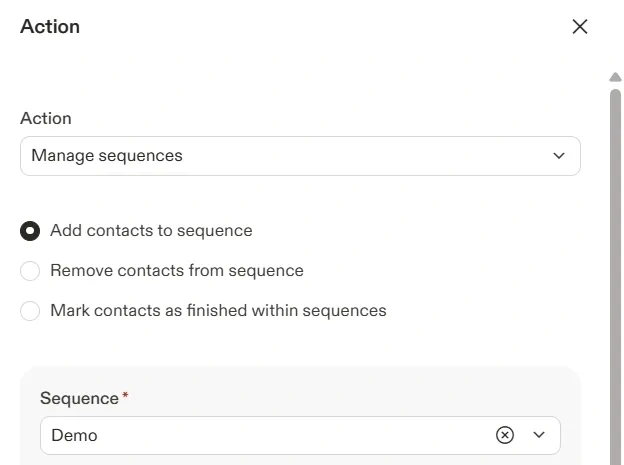
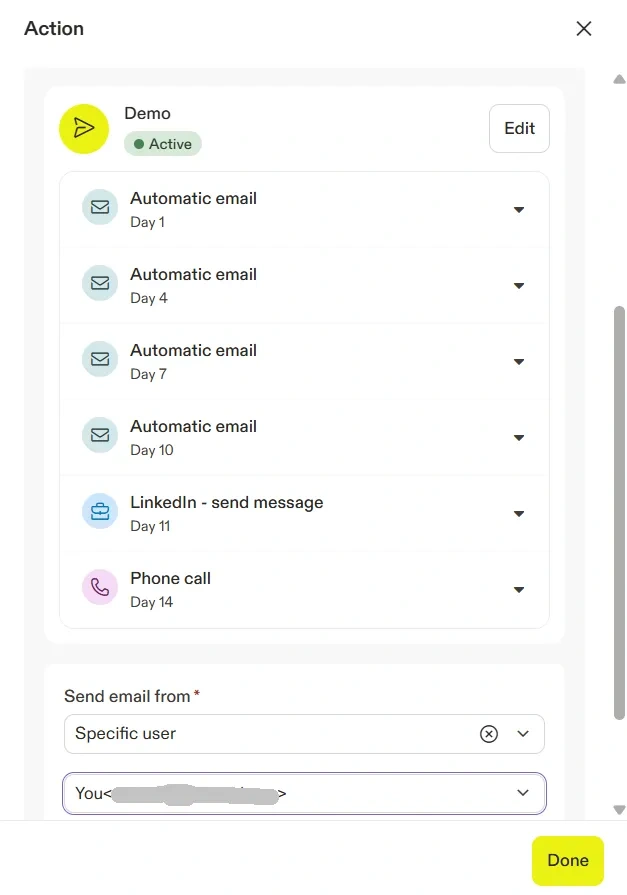
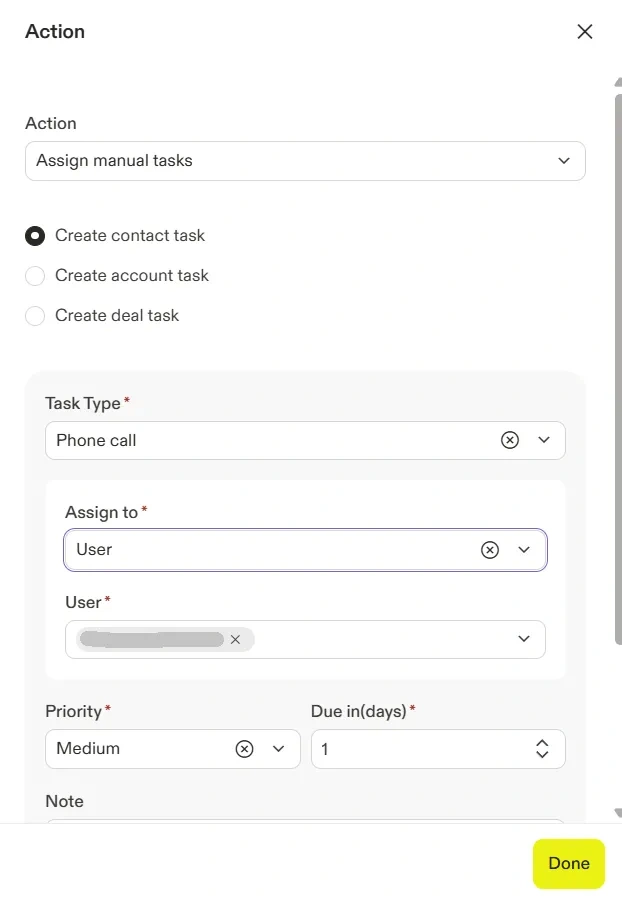
Step 5: Add a block for Assign manual Task
- Click on add block again then Click on Assign manual Tasks.
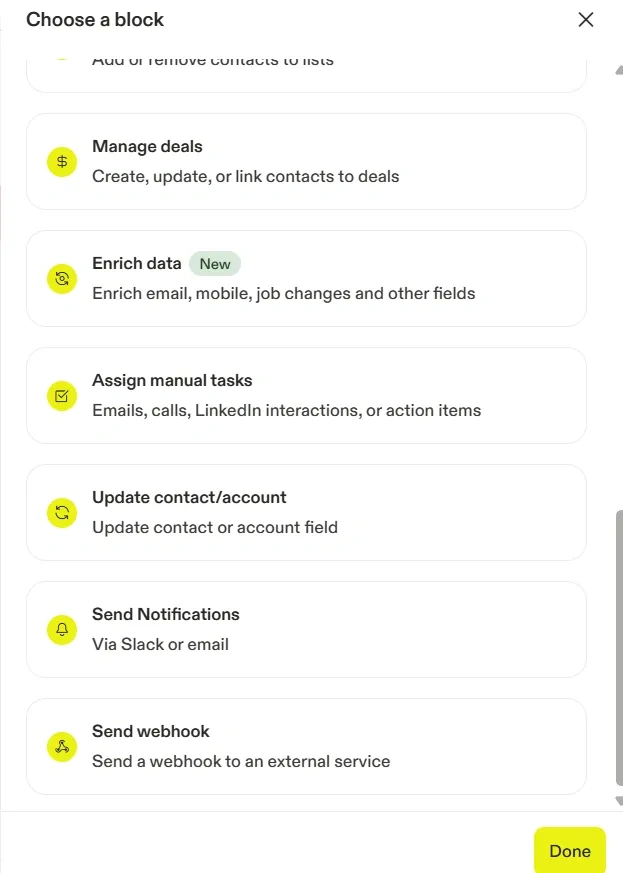
- Select Create Contact Task and choose the Task Type Under LinkedIn Interaction, enter LinkedIn step: interact with post, then assign the task to the required user and then click on Done.
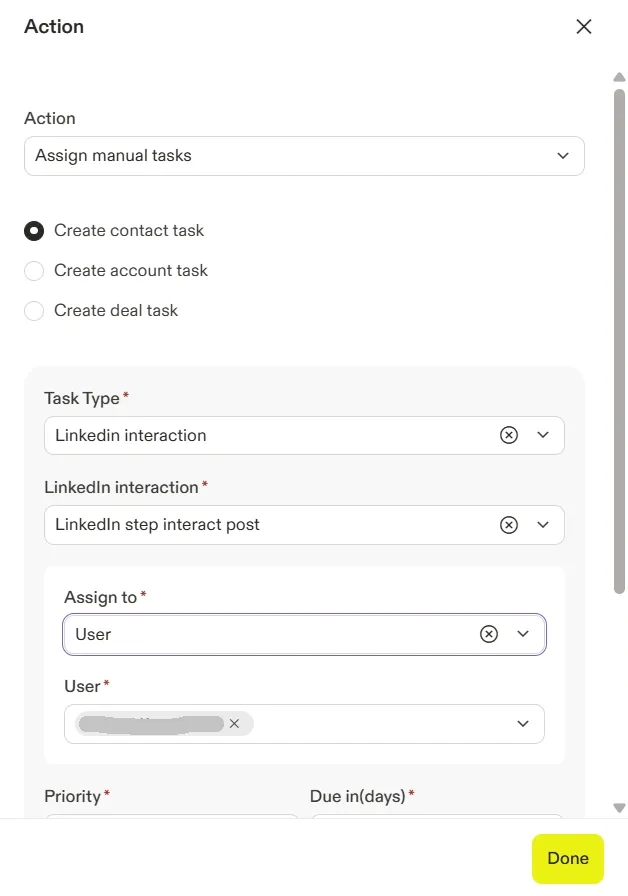
- Add another block, then select Create Contact Task. Choose Phone Call as the Task Type, assign it to the required user, and finally click Done.
Step 6: Launch Workflow
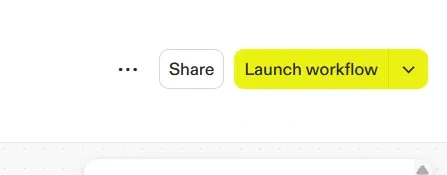
After completing all the tasks, click on Launch Workflow, which is located at the top-right corner of the workflow page.
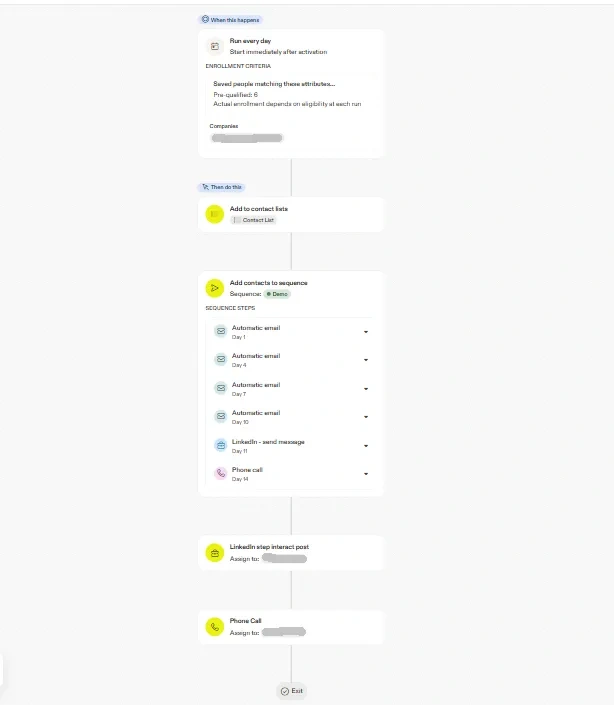
After clicked on Launch Workflow ,Finally, we have created the workflow. You can see that it looks like this.
Conclusion
Workflows in Apollo help automate your sales and marketing processes, making your day to day tasks much easier to manage. Instead of spending hours on repetitive actions like sending follow-up emails or updating lead records, workflows take care of them automatically in the background.
Using workflows correctly can save time, improve efficiency, and increase productivity. They ensure that no lead is forgotten, every prospect gets timely communication, and your sales pipeline moves forward smoothly. Over time, these automations can transform the way you work, giving you more freedom to focus on strategy, creativity, and building stronger relationships with your customers.